






VIEWPOINT-  Successful Black Commercial Farmers and the Power of Practical Mentorship in South African Agriculture

VIEWPOINT- Successful Black Commercial Farmers and the Power of Practical Mentorship in South African Agriculture

Star InactiveStar InactiveStar InactiveStar InactiveStar Inactive
 
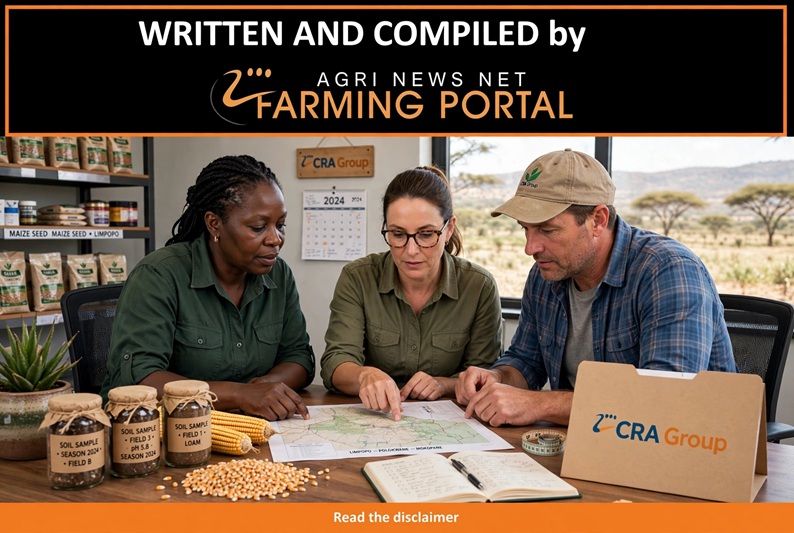
South Africa’s agricultural sector continues to face complex challenges around land reform, food security, economic inclusion and the need to grow a new generation of competent commercial farmers. At the centre of this discussion stands a group of Black commercial grain and livestock producers who have already proven they can succeed at scale. These farmers operate viable businesses, manage risk, produce food for the nation and understand the hard realities of modern farming — from input costs and weather risks to market access and labour management.Their success stories often include meaningful relationships with experienced commercial farmers who have shared practical knowledge over many years. Mentorship of this kind typically covers technical skills such as soil management, cultivar selection, planting and harvesting techniques, machinery maintenance, financial planning, marketing and dealing with the realities of rural security. These relationships are built on mutual respect and a shared understanding that farming is a results-driven profession.
Competence, consistency and commercial discipline matter far more than politics or symbolism.This kind of knowledge transfer is especially valuable because commercial farming requires far more than access to land. Capital, equipment, working knowledge of markets, risk management and continuous learning are equally important. Many emerging farmers struggle not because of a lack of ambition, but because these supporting elements are incomplete or inconsistently provided. Government programmes have an important role to play in funding, training, infrastructure and land allocation, yet delivery has frequently fallen short of expectations. Delays, bureaucratic processes and a shortage of practical, hands-on support have limited the impact of well-intentioned policies.

South Africa’s Communal Farmers Are Becoming Employers

At the same time, the existing commercial farming community — which still produces the majority of South Africa’s food — holds decades of accumulated expertise. When this knowledge is shared willingly and respectfully, it creates a powerful multiplier effect. Successful Black commercial farmers who have benefited from such mentorship are themselves becoming roleers and role models, helping to expand the pool of competent producers. This organic growth strengthens food production, creates rural jobs and builds social cohesion.
The alternative — relying solely on top-down government interventions without strong private-sector partnerships — has repeatedly shown its limitations. Land without capital, skills and market access often remains underutilised. Conversely, partnerships that combine experience, capital and emerging talent tend to deliver better commercial and social outcomes. These partnerships work best when they are voluntary, based on mutual benefit and free from political pressure or racial polarisation
.South Africa needs more successful commercial farmers of every background. Expanding the ranks of Black commercial producers who operate profitably and sustainably is in the national interest. It improves food security, reduces pressure on urban areas and demonstrates that excellence in agriculture is achievable across communities. Achieving this requires honest conversations about what actually works: practical mentorship, commercial discipline, reliable infrastructure, secure property rights and targeted support that prioritises competence over symbolism.
The farmers who already succeed on these terms deserve recognition and respect. Their experience shows that when knowledge is shared and hard work is rewarded, South African agriculture can grow stronger for everyone.

DISCLAIMER

The views and opinions expressed in this article are those of the writers and do not necessarily reflect the views or positions of any entities they represent. The information contained in this website is for general information purposes only. The information is provided by CRA and while we endeavour to keep the information up to date and correct, we make no representations or warranties of any kind, express or implied, about the completeness, accuracy, reliability, suitability or availability with respect to the website or the information, products, services, or related graphics contained on the website for any purpose. Any reliance you place on such information is therefore strictly at your own risk. 18,101 readers per week.  

NS -We normally do not post sponsored or external videos on our professional platforms. However, videos of this nature — which are non-marketing and informative — are not freely available  YouTube channels.