










Consumers are still benefiting from relatively low food inflation, but much of the cost of producing food that will only be harvested in 2027 is already being incurred under the extraordinary conditions of 2026. Even if geopolitical conflicts ease before year-end, those costs will remain embedded in diesel, fertiliser, production finance, planting decisions and the cost structure of the crop. The greatest risk is therefore not El Niño in isolation, but the possibility of a difficult production season arriving when every kilogram of food has already become more expensive to produce.
South Africa enters the 2027 agricultural season from what may appear, on the surface, to be a relatively comfortable position. Food and non-alcoholic beverage inflation stood at only 1.1% in August 2026, supported by strong recent agricultural production and comparatively good grain availability. South Africa has come through two favourable summer-grain seasons, maize supplies are comfortable, and consumers have not yet experienced anything resembling a broad food-price crisis.
The position at farm level, however, is less reassuring. Diesel increased sharply in September, international fertiliser markets have been disrupted by geopolitical tension and shipping uncertainty, agricultural finance has become more expensive, and Black Sea grain flows remain vulnerable to the continuing effects of the Russia-Ukraine war. South Africa also remains structurally dependent on imported wheat and on a wide range of agricultural inputs priced in international markets and ultimately converted through the rand-dollar exchange rate.
At the same time, a powerful El Niño is developing as Southern Africa enters its 2026/27 production season.
None of these pressures on its own necessarily constitutes a national agricultural crisis. South African producers have operated through droughts, high interest rates, currency volatility, disease outbreaks and severe input-cost increases before. The concern for 2027 lies in the possibility that several of these pressures may overlap, reinforcing one another and narrowing the margin for error across the food system.
The 2027 harvest is already carrying 2026 costs
One of the most important points in assessing the 2027 outlook is that agriculture operates with a long production cycle. A crop harvested in March, April or May 2027 may have been planned, financed, fertilised and planted under the much more expensive conditions prevailing during 2026.
This means that even if geopolitical conflict in the Middle East or Eastern Europe were to ease before the end of 2026, the agricultural cost already incurred would not disappear. Fertiliser purchased at elevated prices will already have been applied. Diesel used during land preparation and planting will already have been consumed. Interest charged on production finance will already have accumulated, while seed, chemicals, machinery, labour and insurance will have been committed long before harvest.
The World Bank expects its fertiliser price index to rise by more than 30% during 2026, with urea projected to increase by close to 60%. The increase is linked to energy costs, production disruption and interference with fertiliser trade through the Middle East. Its baseline outlook assumes some easing during 2027 if exports, energy flows and shipping conditions normalise, but the risk remains that disruption could continue for longer.
For South African grain and oilseed producers, this matters significantly. Grain SA estimates that fertiliser can account for roughly 30% to 50% of variable production costs, while diesel can contribute around 13% to 15%. South Africa also imports more than 80% of its fertiliser requirements, leaving local farmers exposed to both international pricing and currency movements.
The key point is therefore one of timing. The war-related and energy-related production costs of 2026 may still be present in the crops marketed during 2027, even if the international political environment improves before harvest.
El Niño increases production risk, but does not determine the outcome on its own
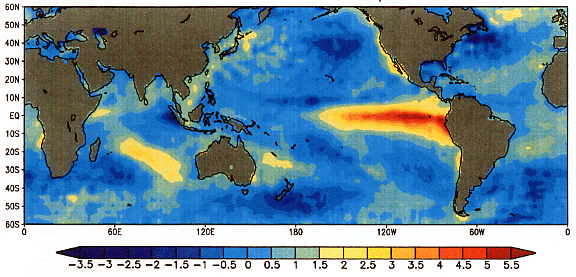
The developing El Niño deserves close attention, but it should be interpreted with care. NOAA’s Climate Prediction Center said in September 2026 that El Niño was strengthening and that there was a greater than 90% probability of a very strong event during late 2026 and early 2027. NOAA also assigned a 75% probability that the October to December 2026 event could exceed the strength of previous El Niño events in its record since 1950.
That is an important climatic warning, but it does not mean that every South African production region will experience severe drought.
El Niño generally increases the risk of below-normal rainfall and above-normal temperatures across large parts of Southern Africa, but rainfall patterns are influenced by several atmospheric systems. Timing is also critical. A summer grain crop may receive a reasonable seasonal rainfall total and still experience serious yield losses if dry periods occur during germination, pollination or grain filling.
South Africa’s Department of Agriculture has already warned that the 2026/27 summer outlook points to below-normal rainfall across many areas, together with higher temperatures typically associated with El Niño conditions. Regional forecasts for Southern Africa show similar risk.
South Africa does, however, enter the season with some important buffers. Above-normal rainfall during the 2025/26 season improved dam levels and soil moisture in many production areas, while strong recent maize harvests have improved available grain stocks.
These factors reduce immediate food-security risk, but they do not eliminate production risk.
The particular concern for 2027 is that an expensive crop could also become a lower-yielding crop. When production costs increase but yields remain strong, those costs can be distributed across a larger number of tonnes. When the same high production expenditure is followed by a drought-related decline in yield, the cost per tonne can rise sharply.
This is also why higher grain prices during a drought do not necessarily mean higher farm profitability. A farmer receiving a higher maize price may still be worse off if the number of tonnes harvested falls sufficiently.
Diesel affects far more than field operations
Diesel remains one of the most important agricultural cost inputs because its influence extends through almost every stage of food production and distribution.

South African farmers absorbed a substantial increase in September 2026, when diesel rose by approximately R2.94 per litre for 0.05% sulphur diesel and R3.15 per litre for 0.005% sulphur diesel. The pressure may not end there. Based on Central Energy Fund data available in late September, diesel was showing an under-recovery of approximately R2.60 per litre for 0.05% diesel and around R3.00 per litre for 0.005% diesel for October. These remain projections until the official monthly adjustment is announced, but if they materialise, farmers could be facing two consecutive months of exceptionally large diesel increases.
For 0.005% sulphur diesel, the September increase combined with the latest October projection would amount to approximately R6.15 per litre in only two months. BusinessTech’s calculation based on the latest CEF data places the projected wholesale price of 0.005% diesel at around R33.05 per litre in October, which would exceed previous record levels.
The agricultural implications extend well beyond the cost of running a tractor. Diesel is required for land preparation, planting, spraying and harvesting, but it also supports irrigation operations, livestock transport, the delivery of animal feed, refrigerated transport, packhouse logistics and the movement of agricultural products from farms to fresh-produce markets, processors, distribution centres and retailers.
This means that the same fuel-price shock can be reflected several times before food reaches the consumer. Higher diesel costs increase the expense of producing the crop, transporting it from the farm, processing or packing it and finally distributing the finished product.
The current increase is also being driven largely by international energy markets rather than domestic agricultural conditions. Brent crude traded above US$100 per barrel for much of September, following renewed Middle East tensions and concerns over energy supply and important shipping routes. Although oil prices have subsequently retreated from recent highs, the under-recoveries accumulated during the month mean substantial October fuel-price increases remain likely.
For agriculture, this creates a significant 2027 risk. Much of the diesel being used during the 2026 planting and production period contributes directly to crops that will only be harvested and marketed during 2027. Even if international oil markets stabilise later, those higher production costs will already have been incurred.
The effect therefore follows the same delayed pattern seen with fertiliser and production finance: the cost is paid by the farmer during 2026, while part of its impact may only become visible in food prices during 2027.
Fertiliser links international conflict directly to local production
South Africa’s dependence on imported fertiliser creates another important point of exposure.
Nitrogen fertiliser production is closely linked to natural gas, while the Middle East remains an important global producer and exporter of urea and ammonia. Disruption around the Strait of Hormuz therefore has implications well beyond the energy market. Shipping constraints, insurance costs, disrupted production and higher natural-gas prices can all affect fertiliser availability and pricing.
The Russia-Ukraine war has also continued to influence international agricultural inputs, grain flows and shipping routes.
For South Africa, this international risk is magnified because so much fertiliser must be imported. The impact is not limited to the international commodity price. Freight, insurance, energy, port costs and the rand-dollar exchange rate can all influence the landed cost.
A disruption thousands of kilometres away can therefore materially alter the cost of producing maize, wheat, oilseeds, vegetables and fruit in South Africa.
 Climate change is intensifying El Niños - study suggests
The rand remains a major agricultural risk multiplier
It would be inaccurate to describe the rand as being in a state of continuous collapse. The currency has shown periods of relative resilience during 2026. However, South African agriculture remains structurally exposed to the rand-dollar exchange rate because so many important inputs and commodities are priced internationally.
Fertiliser, crude oil, agricultural chemicals, machinery components and imported wheat are all influenced directly or indirectly by the dollar.
The effect of a weaker rand is therefore often to magnify an international price increase.
If an imported input rises by 20% in dollar terms and the rand simultaneously weakens by 10% against the dollar, the local increase is approximately 32% before additional freight, handling and domestic cost increases are considered.
Currency risk is therefore not a peripheral issue for agriculture. It can determine whether South Africa absorbs part of an international shock or experiences a much larger local price increase.
The wheat market illustrates this particularly clearly.
Wheat exposes a structural weakness in South African food security
South Africa consumes more than 3.5 million tonnes of wheat annually but produces only around half of that requirement domestically. Government estimates indicate that the country normally imports roughly 40% to 50% of the wheat it consumes.
This means that South Africa enters every ordinary year already dependent on international wheat markets.
At the same time, domestic wheat production has been under increasing economic pressure. Grain SA reports that the area planted to wheat is now at its lowest level in 97 years, while the 2026 wheat crop is estimated at around 1.76 million tonnes, approximately 7.5% lower than in 2025.
The decline in wheat area cannot simply be blamed on farmers abandoning a strategically important crop. Producers allocate land according to expected return, production risk and the long-term sustainability of the enterprise.
In the Western Cape, canola has become an increasingly important component of crop rotations. South African canola plantings have expanded from around 34,000 hectares in 2010 to approximately 192,300 hectares in 2026.
Not every hectare gained by canola represents a hectare lost by wheat, but the broader trend remains important. Wheat is competing for land, capital and management attention against crops that may offer a more attractive balance between margin, rotation benefit and production risk.
This creates a long-term food-security concern. If wheat production becomes persistently less attractive, the country becomes more dependent on imported supply. Rebuilding lost production capacity during a later international crisis is not a simple or immediate process.
Machinery, skills, crop rotations, storage systems, seed demand and investment all develop over time.
South Africa therefore does not need a domestic wheat failure for bread prices to increase. A poor harvest in a major exporting region, Black Sea disruption, higher freight costs or a weaker rand can raise the cost of imported wheat even when South African production performs reasonably well.
Regional crop failure could increase pressure on South African grain
South Africa’s agricultural outlook also cannot be considered in isolation from the rest of Southern Africa.
Regional grain markets are closely linked, and South Africa remains an important supplier to neighbouring countries. Some countries are structurally dependent on imports, while others move between surplus and deficit depending on seasonal rainfall and production.
This becomes particularly important during El Niño conditions.
Across much of Southern Africa, household and community food security still depends heavily on small-scale, rain-fed agriculture. Many smallholders have limited access to irrigation, affordable finance, insurance, improved storage and sophisticated risk-management tools.
This does not make small-scale agriculture inherently inefficient or undesirable. It does, however, mean that many producers have fewer buffers when rainfall fails.
When one household loses a crop, the consequences are primarily local. When hundreds or thousands of households within the same rainfall zone experience similar crop losses, the effect begins to move through informal markets and regional trade systems.
A smallholder household that usually feeds itself and sells part of its production can become a net food buyer after a crop failure. Local supply declines at the same time as demand increases.
Traders then travel farther to source grain and fresh produce, transport costs increase, prices rise and more households begin depending on external food markets.
If several Southern African countries experience poor harvests simultaneously, regional food-security risk increases sharply because fewer surplus areas remain available to supply deficit areas.
This is why the impact on South Africa could extend beyond its own crop. A reasonably good local maize harvest can still experience upward price pressure if neighbouring countries experience substantial production losses and regional demand rises.
South African food prices therefore do not depend only on rainfall within South Africa’s borders.
Informal food markets make affordability particularly important
The role of South Africa’s informal food economy must also form part of the 2027 discussion.
Claims that 62% of all food produced in South Africa moves through informal markets cannot be substantiated nationally and should therefore be avoided.
However, the available evidence confirms that informal trade plays a substantial role in food distribution. A government-commissioned assessment estimated that informal traders account for approximately 40% of South African food trade, while research into municipal fresh-produce markets has suggested that around 50% to 60% of market sales may ultimately supply informal buyers.
At the Johannesburg Fresh Produce Market, informal traders are among the major buyers moving fruit and vegetables into townships, informal settlements and lower-income communities.
This makes informal trade part of South Africa’s food-distribution infrastructure rather than a marginal economic activity.
It also means that higher agricultural costs can reach vulnerable households through a supply chain with limited capacity to absorb price increases. Small traders generally have limited working capital, limited cold-storage capacity and thin margins.
When wholesale prices, transport costs or market charges rise, the trader usually has only a few options: increase the selling price, reduce the quantity offered, accept a lower margin or stop carrying the product.
Eventually the cost reaches the household.
That is particularly concerning in a country where Statistics South Africa reported that 22% of households considered their access to food inadequate or severely inadequate in 2025.
The official food poverty line stood at R855 per person per month in 2025, representing the estimated minimum required to meet basic energy requirements.
For households close to that level, food inflation is not simply a matter of changing brands. It can influence what is eaten, how often protein is purchased, whether fresh produce remains affordable and how far social grants or wages stretch.
The poorest households therefore carry a disproportionately large share of the food-security risk.
Food inflation can create wider economic pressure
It would be irresponsible to claim that rising food prices automatically lead to social instability. Political, economic and social outcomes are influenced by unemployment, inequality, service delivery, household income, public policy and many other factors.
However, international evidence does show that severe food-price increases can increase the risk of social strain when they interact with poverty and existing economic grievances.
This distinction is important.
Food-price pressure can reduce disposable income, increase pressure on wages, place additional strain on social-support systems and worsen labour tensions. Where broader economic conditions are already weak, these effects can become more significant.
For agriculture, social and economic instability can also create additional operating costs through logistics interruptions, increased security expenditure and pressure on labour relations.
This means that a food-price shock can eventually feed back into agricultural production itself.
Farm labour is exposed to the same increase in living costs
Farm workers are consumers as well as an input in the production budget.
They face the same increases in bread, maize meal, meat, milk, transport, electricity and other basic costs as everyone else.
South Africa’s national minimum wage increased to R30.23 per hour from 1 March 2026, including for farm workers.
If basic living costs increase significantly during 2027, pressure for higher wages is likely to intensify.
For workers, this is fundamentally a household affordability issue. For farmers, labour remains a major production cost in many agricultural industries.
This creates another area where inflation can reinforce itself. Higher production costs contribute to food-price pressure, while higher food prices increase pressure on wages. Higher labour costs then flow back into the cost of planting, harvesting, packing and processing.
The answer cannot simply be to suppress wages, nor can farmers indefinitely absorb cost increases that make production economically unviable.
The long-term health of agriculture depends on both viable farm businesses and workers able to afford a reasonable standard of living.
Finance remains one of agriculture’s less visible inputs
Agriculture is particularly sensitive to interest rates because production expenditure usually occurs months before income is received.
Farmers purchase seed and fertiliser, pay workers, use diesel, apply chemicals and operate machinery long before the crop is harvested and sold.
Agriculture therefore effectively finances time.
The South African Reserve Bank increased the policy rate to 7.25% in September 2026 and expects inflation to remain elevated into 2027 before moderating later in the year. The Bank has identified fuel prices and El Niño-related drought risk among the factors that could keep inflation higher than expected.
When finance becomes more expensive, the carrying cost of a crop increases.
The risk becomes greater when expensive borrowing coincides with lower yields. A farmer may finance a crop based on an expected production level only to find that drought removes part of the tonnage needed to service that debt.
The financial consequences can therefore carry into the following season, weakening balance sheets and limiting future investment.
Low food inflation today should not create complacency
South Africa currently benefits from an important buffer.
Food inflation remains low, and the country has recently produced strong maize harvests. These conditions reduce immediate pressure on consumers and provide valuable grain availability heading into a more uncertain season.
They should not, however, be confused with evidence that future risk has disappeared.
International conditions are already becoming less comfortable. FAO’s Food Price Index rose by 1.9% in August 2026, while the organisation’s cereal index reached its highest level since May 2024. Adverse weather, geopolitical tension and uncertainty around Black Sea trade have all contributed to renewed international concern.
There is therefore a timing issue between what is happening in agriculture and what is currently visible in retail food inflation.
Farmers often experience the cost increase first.
The consumer may only see the full effect months later, after crops are harvested, livestock feed costs change, processors adjust prices and wholesalers and retailers pass on higher costs.
The apparent calm in current food inflation may therefore say more about the strong harvests of the recent past than about the agricultural risk facing 2027.
Three agricultural scenarios for 2027
No responsible agricultural outlook can state with certainty that South Africa is heading into a severe crisis.
The present situation is better understood through scenarios.
A relatively favourable outcome
El Niño proves less damaging to South African rainfall than feared, crop yields remain acceptable, Middle Eastern shipping begins normalising, fertiliser prices moderate, Black Sea grain continues moving and the rand remains comparatively stable.
Under this scenario, the main 2027 problem may be reduced farm profitability rather than a serious national food-price shock. Higher 2026 production costs would still be reflected in margins, but adequate harvests and strong opening grain stocks would help protect consumers.
A difficult production year
Rainfall becomes erratic across important summer-grain regions and yields decline. Regional crops also deteriorate, while diesel and fertiliser costs remain elevated and the rand weakens.
South Africa then faces higher domestic grain prices, more expensive livestock feed and greater pressure on imported wheat costs.
Chicken, eggs, pork, dairy and feedlot production could all come under pressure, while fresh-produce prices may become more volatile.
Under this scenario, the risk begins to move more clearly from the farm balance sheet to the consumer.
A severe convergence of risks
The most difficult outcome would involve substantial Southern African drought coinciding with continued geopolitical disruption, high fuel and fertiliser costs, uncertain Black Sea trade, currency weakness and expensive finance.
South Africa could then produce less grain at precisely the time neighbouring countries require more.
Poor harvests in other major producing regions could also raise international grain prices.
Imported wheat would become more expensive, while feed costs would place additional pressure on livestock producers. Poor grazing conditions could increase supplementary feeding requirements.
Informal traders would be forced to pass higher wholesale and transport costs into communities where food budgets are already stretched.
This is the scenario that justifies the description of a possible perfect storm.
It is not the inevitable outcome for 2027, but neither can it be dismissed. The individual elements of the risk are already visible. The uncertainty lies in how many of them will ultimately overlap.
The poorest South Africans have the least protection
The phrase “the consumer” can hide substantial differences between households.
A household with discretionary income can respond to food inflation by switching brands, changing spending habits or reducing non-essential expenditure.

When food consumes a large share of household income, price increases are often absorbed through changes in diet and quantity. Protein may be purchased less frequently, fruit and vegetables may be reduced, portions can become smaller and households can become more dependent on school-feeding schemes or social grants.
Agricultural risk therefore becomes broader economic risk when food affordability begins deteriorating.
Agriculture directly employs close to one million South Africans, while many more depend indirectly on input suppliers, processing, transport, storage, wholesale markets and exports.
A difficult agricultural year therefore extends far beyond the farm itself.
It reaches workers, rural towns, packhouses, transporters, processors, informal traders and eventually households.
South Africa should prepare without assuming disaster
South Africa remains in a far stronger position than many food-insecure countries.
The country has a highly developed commercial agricultural sector, sophisticated commodity markets, good storage infrastructure, modern genetics, irrigation systems, advanced farming technology and major export industries.
Recent maize harvests have also created valuable stock buffers.
Global cereal markets are not currently forecasting universal shortage, and several major crops remain comparatively well supplied.
These strengths matter and should prevent the current risk outlook from being interpreted as a prediction of collapse.
However, the concentration of pressure entering 2027 is unusually broad.
South Africa faces the possibility of a strong El Niño, below-normal rainfall across important areas, high temperatures, expensive diesel, elevated fertiliser costs, continuing Black Sea uncertainty, heavy wheat-import dependence, declining wheat hectares, currency risk and higher production-finance costs.
It also operates within a Southern African food system where simultaneous crop failure can increase regional demand for South African grain.
Even if international wars were to end before the close of 2026, part of their cost is already embedded in the 2027 crop.
Even if South Africa receives reasonable rainfall, failed harvests elsewhere can still raise world prices.
Even if the local maize crop performs well, weaker regional harvests can increase demand for South African grain.
Even if the rand remains reasonably stable, wheat imports remain necessary.
And even where enough food is physically available, affordability can deteriorate without the country ever experiencing empty shelves.
The central risk for 2027 is therefore not one isolated threat. It is the possibility that several agricultural, climatic and economic pressures occur at the same time.
Farmers will encounter those pressures first through input costs, production risk and margins.
Consumers will encounter them later through food prices.
The effectiveness with which South Africa manages that period will depend on the resilience of its farmers, the performance of regional harvests, international commodity markets, currency stability, sensible agricultural policy and, ultimately, rainfall.
Frequently Asked Questions
1. Is South Africa definitely heading for drought in 2027?
No. Current forecasts indicate a significant El Niño-related risk, with below-normal rainfall favoured across many parts of Southern Africa. However, rainfall varies considerably between regions and seasons, and a strong El Niño does not guarantee severe drought across every South African production area.
2. Why could food prices rise in 2027 if international wars end during 2026?
Agricultural production costs are incurred well before harvest. Fertiliser, diesel, seed, chemicals, labour and finance used for crops harvested in 2027 may already have been purchased or committed during 2026. Lower international prices later would benefit future production, but would not remove costs already embedded in the current crop cycle.
3. Why is South Africa’s wheat position a food-security risk?
South Africa produces only around half the wheat it consumes and imports roughly 40% to 50% of its requirements. Domestic wheat hectares have also declined substantially over time. This leaves bread prices exposed not only to local production conditions, but also to international wheat prices, freight costs, Black Sea trade conditions and the rand-dollar exchange rate.
4. Why are poorer households particularly vulnerable to rising food prices?
Lower-income households spend a larger proportion of their income on necessities such as food and transport. They therefore have less room to absorb price increases. Informal traders also play an important role in supplying fresh produce and other foods to lower-income communities, which means increases in wholesale and transport costs can move quickly into household food budgets.
5. What is the greatest agricultural risk facing South Africa in 2027?
The greatest risk is convergence. El Niño could reduce yields at the same time that diesel, fertiliser, finance and imported inputs remain expensive. A weaker rand could amplify international price increases, while South Africa’s wheat dependence leaves bread exposed to global markets. Regional crop losses could also increase demand for South African grain. Any one of these challenges can be managed more easily in isolation. The concern is the possibility that several occur together.


