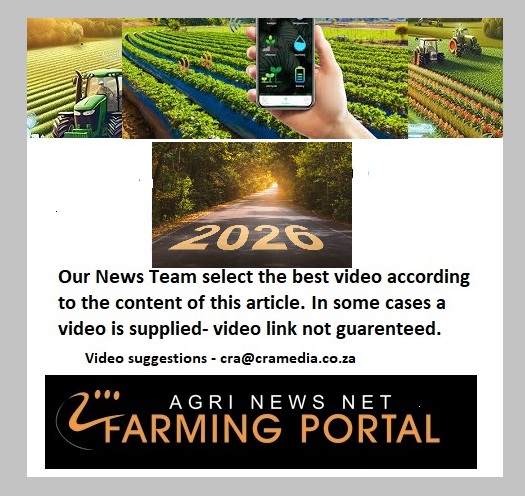








We are standing at a crossroads where farmers must decide whether they will embrace Artificial Intelligence (AI) or risk falling behind in an increasingly competitive global agricultural market.
Agriculture has always evolved. We moved from manual labour to tractors, from basic irrigation to precision farming, from handwritten records to satellite-guided equipment. Artificial Intelligence is simply the next major step in that evolution.
The question is no longer whether AI will become part of agriculture.
The question is whether South African farmers are ready.
AI Is Not Replacing Farmers
Many people fear that Artificial Intelligence will replace farmers. That is simply not true.
AI cannot replace the experience of a farmer who has worked the land for decades. It cannot replace the instinct that comes from generations of farming. What AI can do is provide better information, faster decision-making, and greater accuracy.
Think of AI as another skilled employee—one that never sleeps, continuously analyses data, and helps farmers make better decisions.
The farmer will always make the final decision.
Precision Farming Has Arrived
Artificial Intelligence is already changing the way farms operate.
Modern drones can identify crop stress before it becomes visible to the human eye.
Satellites monitor crop growth, soil moisture, and plant health across thousands of hectares.
Sensors continuously measure soil conditions, allowing irrigation systems to deliver exactly the amount of water needed.
AI systems can predict disease outbreaks, identify nutrient deficiencies, detect insect infestations, and estimate yields months before harvest.
This means fewer inputs, lower production costs, and higher productivity.
Livestock Farming Is Also Changing
Artificial Intelligence is making significant advances in livestock production.
Electronic collars and smart ear tags monitor animal movement, health, body temperature, and feeding behaviour.
AI systems can detect illness before clinical signs become visible, allowing farmers to treat animals earlier and reduce losses.
In dairy farming, AI helps monitor milk production, reproductive cycles, and herd performance.
These technologies improve animal welfare while increasing profitability.
 Artificial intelligence could dramatically improve weather forecasting
The Business of Farming Is Becoming Smarter
Successful farming today is no longer only about producing food.
It is about managing risk.
Artificial Intelligence can analyse markets, weather forecasts, exchange rates, commodity prices, and production costs simultaneously.
This helps farmers make more informed decisions about planting dates, input purchases, storage, and marketing.
Better information leads to better financial decisions.
South Africa Has the Opportunity
South Africa has world-class commercial farmers who already compete successfully in international markets.
Our fruit, wine, maize, citrus, macadamia, beef, and other agricultural products are recognised worldwide for their quality.
By adopting Artificial Intelligence responsibly, South African agriculture can become even more competitive while improving sustainability and resource management.
AI can help farmers produce more food using less water, less fertiliser, and fewer chemicals.
This benefits producers, consumers, and the environment.
But Challenges Remain
Artificial Intelligence is not without its challenges.
Many rural areas still struggle with poor internet connectivity, unreliable electricity, limited digital infrastructure, and the high cost of advanced technology.
Training is equally important.
Technology is only valuable when people understand how to use it effectively.
Government, agricultural organisations, universities, technology companies, and the private sector all have a role to play in ensuring that farmers—large and small—can benefit from this technological revolution.
The Farmer of Tomorrow
The successful farmer of tomorrow will not only understand soil, weather, crops, and livestock.
They will also understand data.
The farms that combine practical farming experience with Artificial Intelligence will likely become the most productive, efficient, and sustainable businesses of the future.
Standing at the Crossroads
South African agriculture has reached an important crossroads.
One path continues with traditional methods alone.
The other combines generations of farming knowledge with the power of Artificial Intelligence.
The future belongs to those who are willing to learn, adapt, and innovate while never losing sight of the practical wisdom that has built South African agriculture for generations.
Artificial Intelligence will not replace farmers.
But farmers who use AI effectively may well outperform those who choose to ignore it.
The future of farming has already begun.